Brief and dimensions
We review your enquiry, drawings, sketches, room photos, and approximate measurements before confirming what needs to be made.
Manufacturing capability
Bespoke fitted furniture succeeds when design, machining, finishing, and site installation are planned as one process. Masters coordinates the brief, site details, quotation, production route, and final installation for fitted wardrobes, media wall units, alcove units, home offices, bespoke kitchens, and utility rooms across London and Surrey.
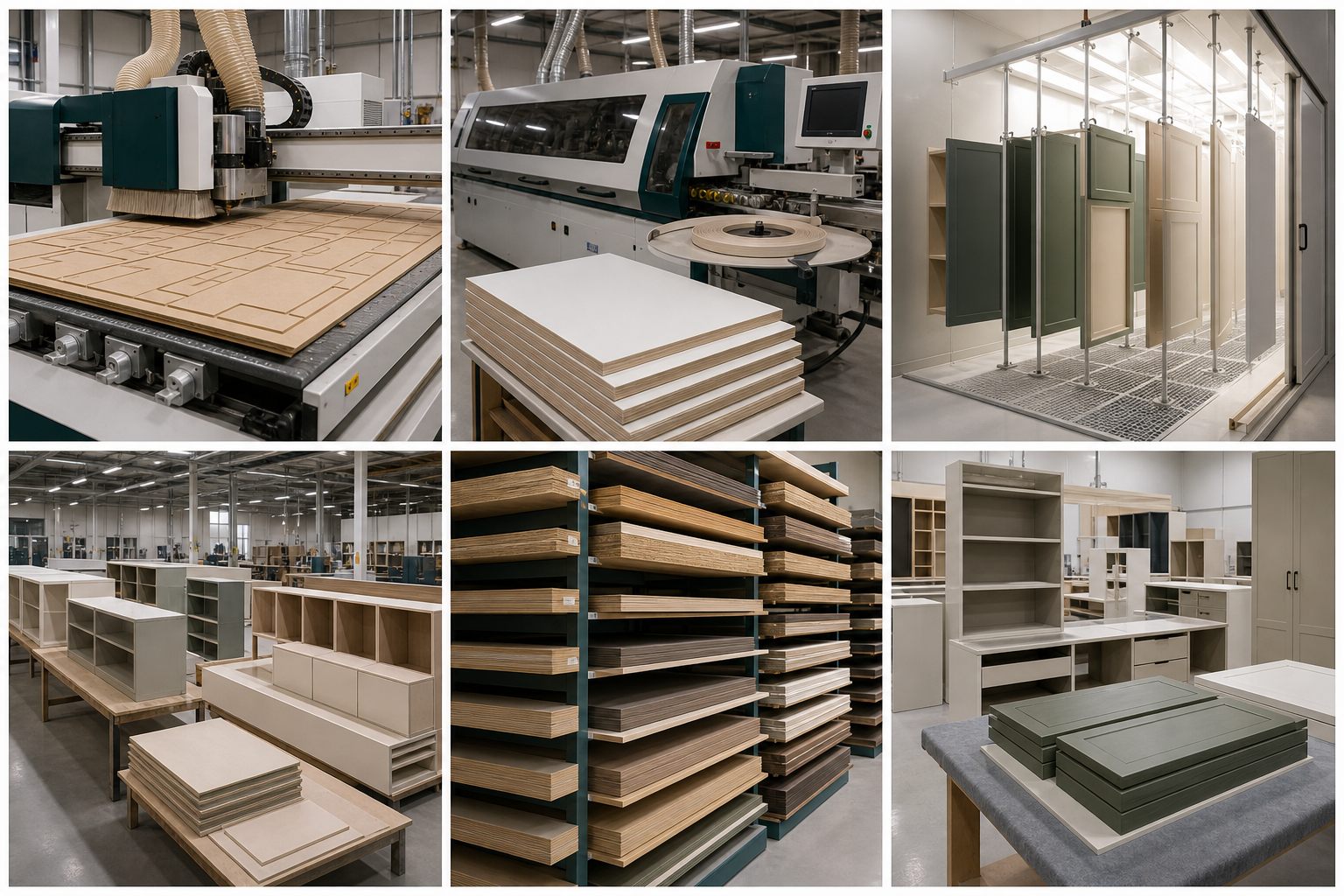
Production story
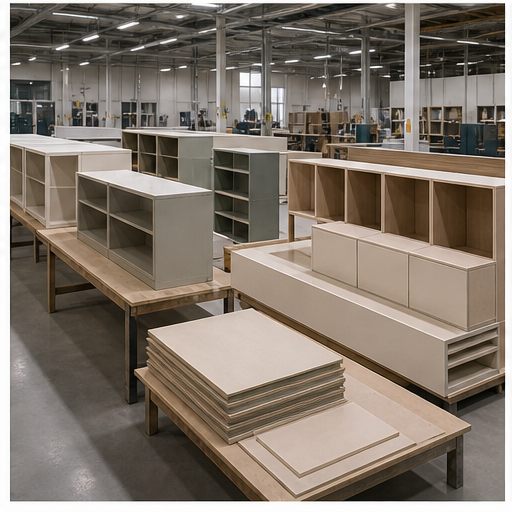
The specialist production route combines modern woodworking machinery with practical joinery judgement. The machines cut, shape, edge, sand, press, plane, and spray with repeatable accuracy. The human part is just as important: checking the brief, choosing the right material, resolving awkward details, and preparing every piece for a clean installation.
How production flows
We review your enquiry, drawings, sketches, room photos, and approximate measurements before confirming what needs to be made.
Furniture parts are broken down into panels, doors, shelves, rails, fillers, end panels, and trims.
Panels are cut to size, shaped or drilled where needed, and finished with clean durable edges.
Sanding, denibbing, veneering, timber preparation, and primer work create the base for a premium finish.
Doors, panels, and components can be spray finished for consistency or finished by hand where the design calls for a warmer, more crafted surface.
Components are checked, packed, delivered, and installed with attention to levels, scribing, fixing, and final presentation.
Meet the machines
Different parts of a fitted furniture project need different tools. Depending on the design, the production route can include board cutting, 5-axis CNC work, edge banding, sanding, veneering, timber preparation, and spray finishing.
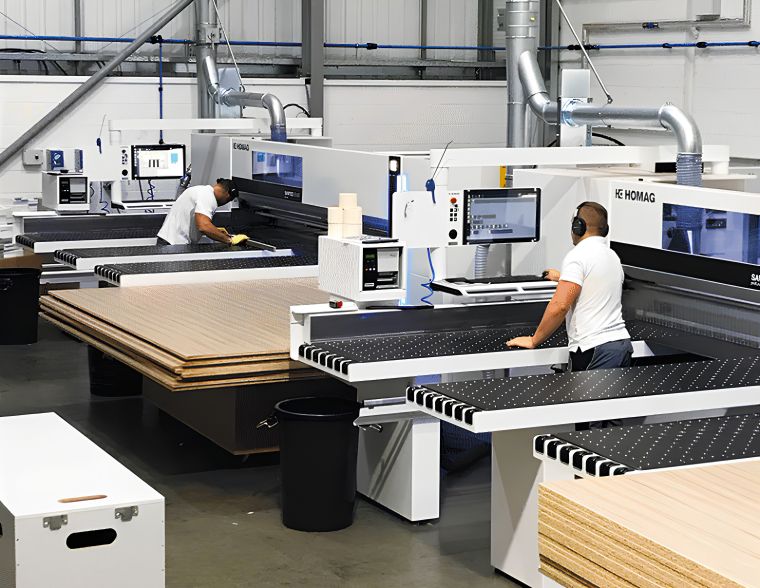
Panel cutting
The board saw cuts sheet materials into accurate component sizes. This is the first step for fitted wardrobes, media wall units, utility storage, home office cabinetry, alcove shelves, and bespoke kitchen storage.
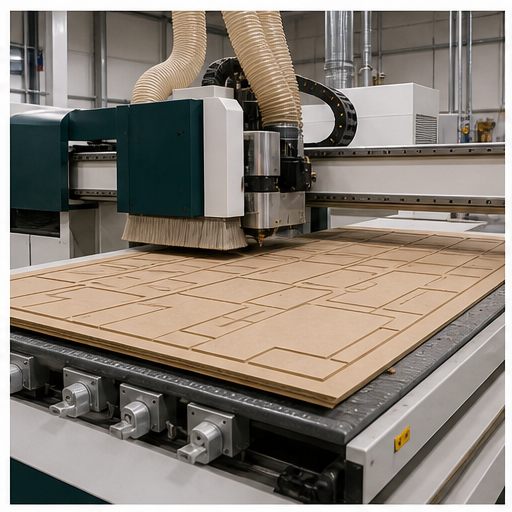
5-axis CNC machining
The 5-axis CNC can rout, drill, groove, shape, and machine more complex components in a controlled setup. This helps with curved forms, angled details, specialist panels, and repeatable joinery components.
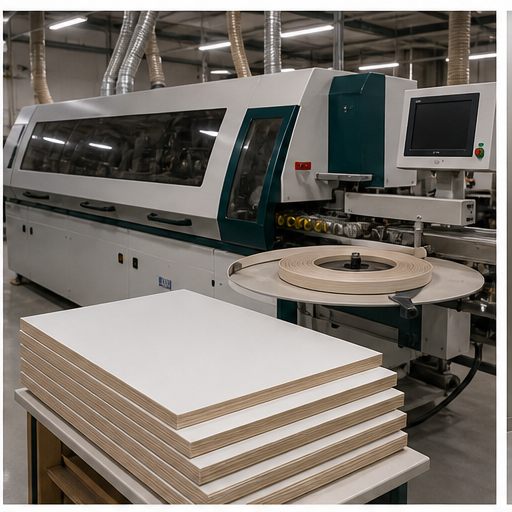
Edge banding
Edge banding seals and finishes exposed panel edges. It is one of the details that makes fitted furniture feel crisp, durable, and professionally made rather than simply cut from board.
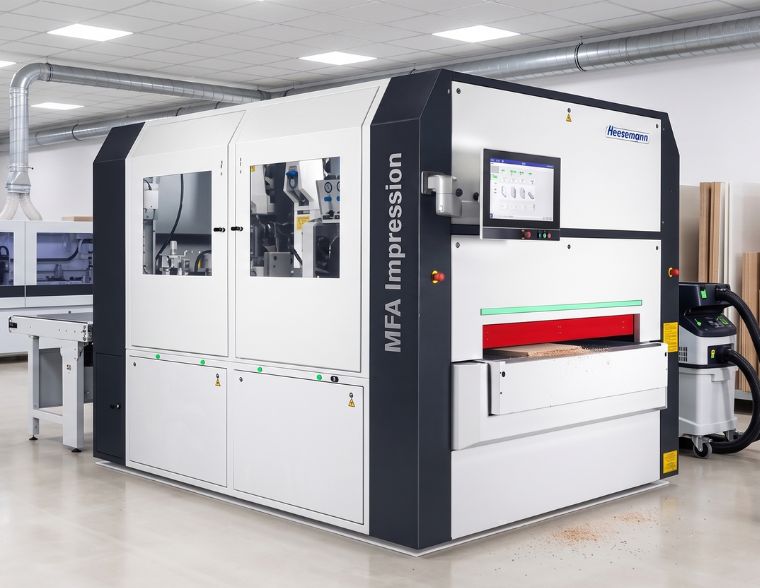
Surface sanding
Sanding prepares MDF, veneer, timber, primer, and lacquered parts so the surface is flat, keyed, and ready for finishing. Good spraying starts before the paint is applied.
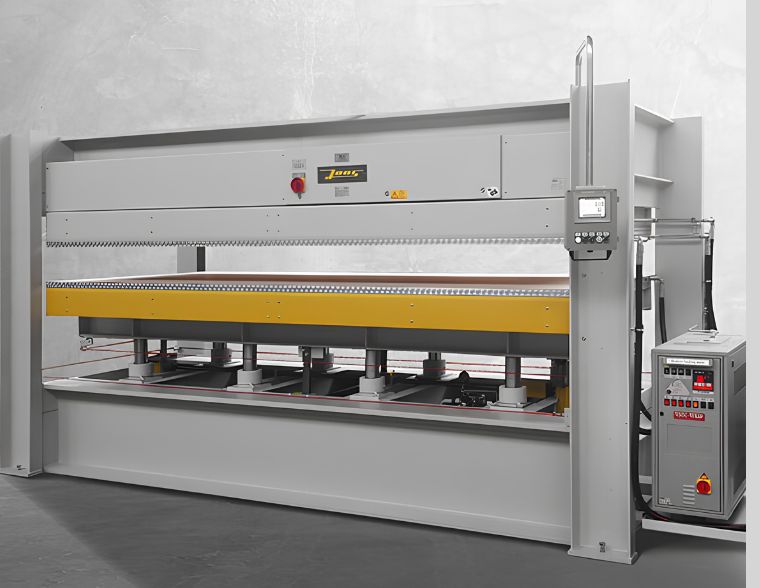
Veneering
Veneer pressing allows real timber veneers to be bonded to prepared panels for richer finishes, feature doors, display units, and bespoke pieces where a painted surface is not the right answer.
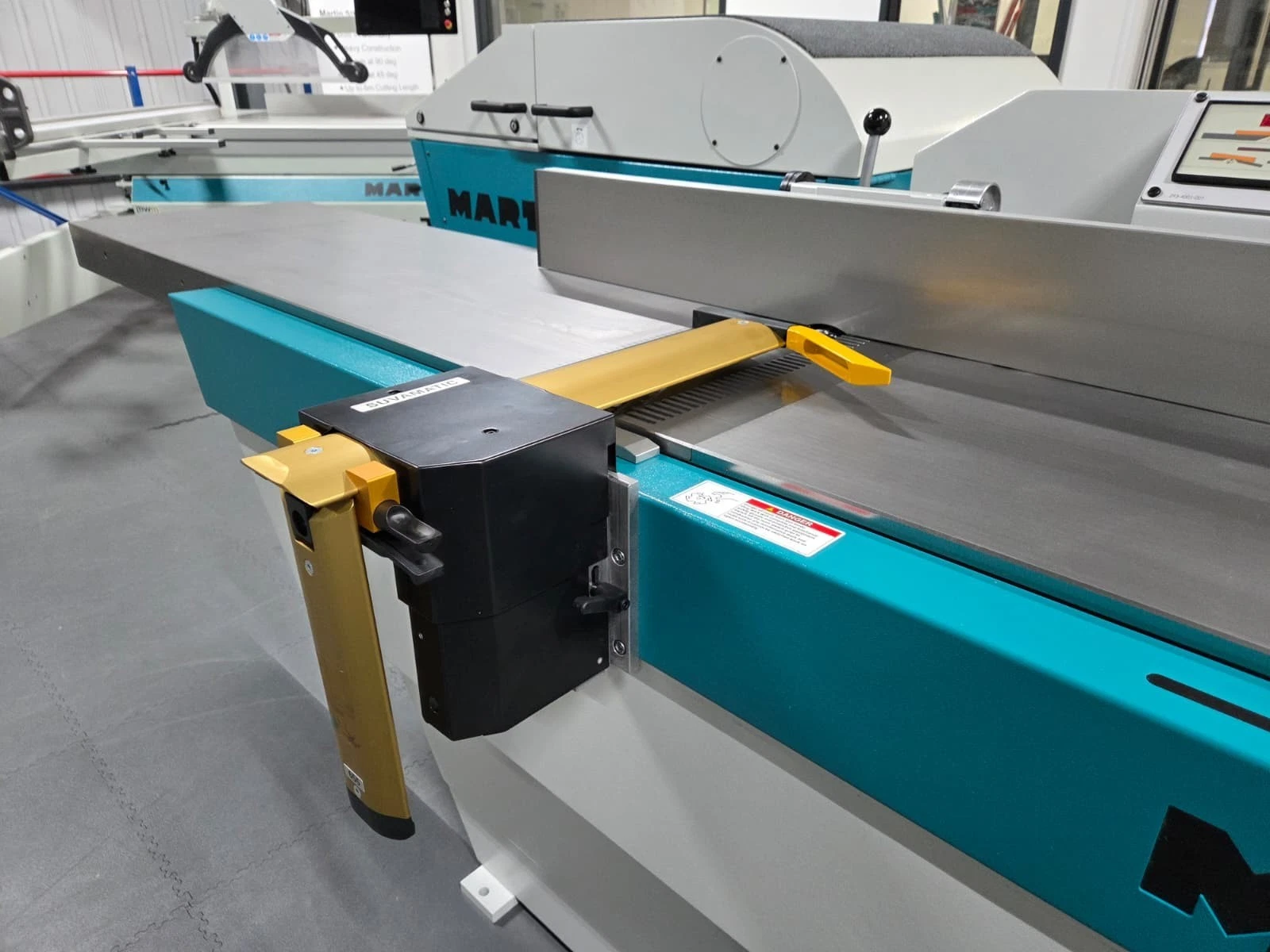
Timber preparation
A planer prepares timber to a consistent thickness. This matters for solid timber details, lippings, trims, framing, and any joinery element that needs to sit cleanly with machined panels.
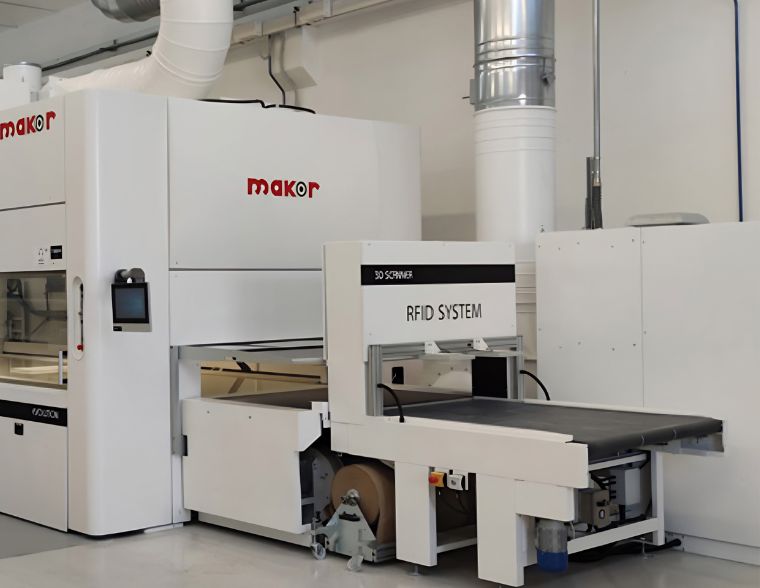
Spray finishing
The sprayline supports consistent painted finishes across doors, drawer fronts, panels, trims, and specialist pieces. It helps create a controlled factory-level surface on modern slab doors, shaker fronts, built-in cabinetry, and colour-matched furniture.
Materials and finishes
The right material depends on where the furniture sits, how it will be used, how it should look, and how the budget needs to work. Depending on the specification and supplier availability, we can work with recognised manufacturers and collections including EGGER, Kronospan, Finsa, MEDITE, Saviola, and Valchromat.
We do not expect clients to know the technical material names at the start. Send inspiration images, colours, samples, or links you like. We will help translate the look into a practical furniture specification.
MFC means melamine-faced chipboard. It is often used for wardrobe interiors, cabinet carcasses, shelves, utility storage, office furniture, and practical fitted storage where durability and clean finishes matter.
MDF means medium-density fibreboard. It is commonly used for painted doors, shaker-style fronts, end panels, trims, and bespoke profiles because it machines well and takes a sprayed finish cleanly.
Veneer gives a real timber surface on a stable panel. Solid timber can be used for details such as lippings, frames, trims, rails, and feature pieces where the design calls for natural material.
Sprayed finishes give a smooth, controlled surface. Hand-painted and hand-finished work can be chosen when the brief calls for a softer, warmer, more traditional feel with visible craft in the final surface.
Furniture quality is also felt in the small details: edging, handle choice, hinges, drawer runners, hanging rails, lighting-ready details, and access panels where services need to remain reachable.
Some designs call for specialist coloured boards, textured surfaces, compact materials, or unusual finishes. We review these case by case so the design intent still works practically on site.
What this means for clients
Accuracy
Digital cutting and CNC machining reduce guesswork, especially where furniture needs to align with walls, openings, appliances, sockets, or existing architectural details.
Finish
The finish is not an afterthought. Edges, sanding, veneer, primer, paint, timber, and hardware choices are reviewed as part of the same production route.
Installation
Built-in furniture has to meet real walls and floors. We plan access, handling, fixing, scribing, fillers, plinths, and final adjustment before the furniture arrives on site.
What we can make
Fitted wardrobes, dressing rooms, bespoke media wall units, alcove units, fitted home office furniture, utility storage, boot-room furniture, bespoke kitchen cabinetry, and one-off built-in pieces.
Modern slab doors, shaker doors, handleless details, open shelving, drawers, hanging rails, sprayed finishes, timber veneer, painted cabinetry, and mixed-material designs.
The best starting point is simple: send sketches, drawings, inspiration pictures, dimensions, and notes about how the furniture should work.
Ready to brief your furniture?